
Electric Motor Assembly
Through technological advancements, electric motors have become smaller and more efficient, creating new challenges for joining technology.
What do Electric Motor Assembly Adhesives do?
Electric motors are omnipresent in everyday life. Bonding provides numerous advantages in terms of production and operation, allowing engineers designing motors to choose from a wide range of adhesives. However, electric motors are not only used for emission-free driving, they are also found in window regulators and seat adjusters. In fact, they can be found everywhere – in electric bikes, in tools, even in our kitchens.
Manufacturers of efficient electric motors rely more and more on rare earth magnets. Since they are prone to corrosion, their surfaces are treated with a coating in the form of passivation, nickel plating, or epoxy resin plating.
This coating may be damaged during assembly, openly exposing the magnets to direct environmental influences. Compared to conventional joining methods, bonding offers many advantages. It is a particularly suitable option for three steps in the assembly of electric motors: joining magnets and lamination stacks, joining shaft and rotor, and joining stator and housing.
Adhesive Key Features
- Reduced production cycle times
- Improved rigidity in construction
- Increased impact protection
- Sound and vibration deadening
- Reduction in weight
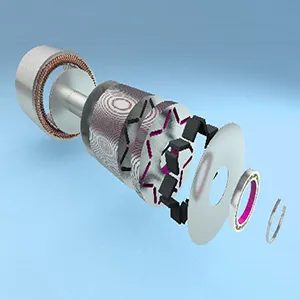
Adhesives provide many benefits to Electric Motor Manufacturers
Adhesives not only compensate for higher manufacturing tolerances and prevent fretting corrosion or contact corrosion, but also provide impact resistance, which is essential to withstand the high dynamic forces of electric motors. Their vibration-damping characteristics reduce noise and provide acoustic improvement.
Thanks to a homogeneous stress distribution, adhesives are able to compensate for thermal stress that may be generated due to different coefficients of thermal expansion between stator and housing. Their gap-filling properties help prevent slippage and play in the area of the shaft.
Why choose DELO Adhesives for use in Electric Motors?
- High Strength & Durability – Designed to handle dynamic loads and vibration
- Thermal Resistance – Maintains performance under extreme temperature conditions
- Optimised for Automation – Fast-curing formulations for high-volume production
- Enhanced Efficiency – Supports lightweight designs and improved motor performance
Typical applications using Adhesives in Electric Motors
- Bonding of stators and rotors
- Magnet fixation in electric motors
- Sensor and housing assembly
- Wire and connector sealing
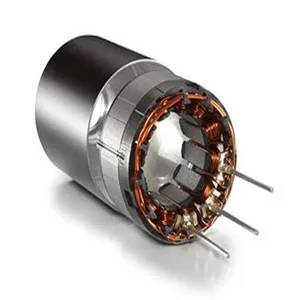
Got a Question About Electric Motor Adhesives?
Whether you’re developing a new product or refining an existing process, Inseto’s team of experts is here to help.
From selecting the right adhesive to optimising your curing process, we provide technical guidance, documentation, and samples to support your application needs.
Knowledge Base Articles
Description
Description
Adhesives for Electric Motors (IKB-090)
Link
Description
Dual Cured Adhesives (IKB-012)
Link
Description
Basic Adhesive Types (IKB-041)
Link
Description
How to Choose the Right Adhesive (IKB-035)
Link
Description
All Things Considered (IKB-042)
Link
Description
Explanation of Low Pressure Plasma Cleaning (IKB-014)
Link
Related Products

Further Information
Applications
Adhesives for Automotive Bonding, Joining and Sealing Applications
Industry Segments
Automotive, Transport, High Reliability
Delo Website
Region
Available from Inseto in the United Kingdom & Ireland
Request Form
 Back to top