Andover, United Kingdom – Inseto, a leading technical distributor of equipment and materials, has supplied and installed a Kulicke & Soffa (K&S) Asterion EV hybrid wedge bonder at the UK Battery Industrialisation Centre (UKBIC).
The UK Battery Industrialisation Centre (UKBIC) offers and develops wirebonding using a K&S Asterion EV wedge bonder, supplied and installed by Inseto.
The Asterion EV gives the national battery manufacturing development facility, UKBIC, the ability to provide a wider range of welding technologies to its customers. The new bonder – specially created to support battery module manufacturing – complements the facility’s existing laser welding capability, meaning the facility can now offer different welding technologies dependent on the application.
Andrew Britton, UKBIC’s Business Development Manager, said: “We’re delighted to be collaborating with Inseto on the installation of this new bonder at UKBIC, meaning that we can offer more welding choice to our customers. The bonder also features a non-destructive inline pull test capability to check weld quality. Also, with wirebonding, cells can be reworked and recycled more easily at end of life.”
Matt Brown, Managing Director of Inseto, added: “We’re delighted to be collaborating with UKBIC so that they can offer wirebonding as a means of interconnecting the many cells in a battery pack. Laser welding and ultrasonic wirebonding processes both have roles to play in battery pack manufacturing, but it’s the latter’s ability to place suitably sized wires that can act as individual fuses for each and every cell that’s got people interested. Also, there’s no need to pre-form complex busbars, which is the case for laser welding.”
The K&S Asterion EV, one of the most advanced bonders in the battery sector, is ultrasonic and uses ambient temperature ‘friction welding.’ It can place and bond aluminium wire in the 100 to 600µm diameter range and copper wire in the 100 to 500µm diameter range.
MAIN ENDS
About UKBIC
The £130 million UK Battery Industrialisation Centre (UKBIC) battery manufacturing development centre was opened by the Prime Minister in July 2021. The unique national facility provides the missing link between battery technology, which has proved promising at laboratory or prototype scale, and successful mass production. Based in Coventry, UKBIC welcomes manufacturers, entrepreneurs, researchers and educators, and can be accessed by any organisation with existing or new battery technology – if that technology brings green jobs and prosperity to the UK.
In addition to funding from the Faraday Battery Challenge through UK Research and Innovation, UKBIC is part-funded through the West Midlands Combined Authority. The facility was delivered through a consortium of Coventry City Council, Coventry and Warwickshire Local Enterprise Partnership and WMG, at the University of Warwick, following a competition in 2018 led by the Advanced Propulsion Centre with support from Innovate UK.
Andover, United Kingdom – SemiProbe has introduced a new family of small-footprint, low cost probe station for basic characterization for small sample testing of samples from die up to 100mm diameter.
SemiProbe mini-PS4L Low Cost Probe Station – Manual Version
The new “mini-PS4L” low cost probe stations are available in either manual or semiautomatic configurations to address multiple applications and testing requirements on devices that are 100 mm or less in size.
Developed in response to market requests for smaller footprint lower cost solutions for basic characterization of small samples, the systems feature a wide-range of modular accessories including DC or HF versions for testing partial or full wafers, individual die or packaged parts etc.
The mini-PS4L series is an expansion of the popular and patented Probe System for Life (PS4L) systems that address an even wider variety of wafer sizes and applications. The PS4L system is the most modular on the market and provides a perpetual field upgrade path. A unique “mini-PS4L” proposition offered by SemiProbe, is a full credit (conditions apply) if customers upgrade to the larger PS4L system.
Inseto is exclusive distributor for SemiProbe in UK, Ireland and Northern Europe.
Andover, United Kingdom – Inseto Invests in Wedge Bonder for its Process Development Laboratory and Launches Two Bonder Operation Training Courses
Kulicke & Soffa Asterion Wedge Bonder Installed at Inseto’s new “Process Development Laboratory”
Inseto, a leading technical distributor of equipment and materials, has invested in a Kulicke & Soffa (K&S) Asterion wedge bonder. Located in Inseto’s new Process Development Laboratory along with materials test and plasma cleaning equipment, the automatic bonder is suitable for the large-wire, fine-wire and ribbon bonding of hybrid circuits, semiconductor devices, sensors, and automotive power modules and battery packs.
Inseto has also launched two training courses: one for wedge bonding, the other for ribbon bonding. Both are delivered by Inseto’s factory trained and highly experienced engineers. Course content is tailored to meet a trainee’s exact requirements and modules include bond theory, bonding tool and wire/ribbon selection, machine setup and operation, process development and bond quality control, and maintenance and repair.
Matt Brown, Inseto’s Managing Director, comments: “These are challenging times for manufacturers. To take full advantage of industry’s latest manufacturing techniques companies must first develop and optimise their processes. They then need to ensure they’re getting the most from their equipment when they move into volume production. Early access to best-in-class equipment and thorough training for operators are therefore essential.”
Brown goes on say that most equipment distributors simply carry demo machines – on loan from their suppliers and which they intend to sell. Inseto, on the other hand, is investing in kitting out its own Process Development Laboratory.
“While all distributors say they’re committed to supporting their customers, we’re demonstrating our commitment through investment,” continues Brown. “Our laboratory is a quiet environment that doesn’t have distractions you find in a manufacturing environment. And with our specialists to hand it’s the ideal place to build and evaluate prototypes, and to receive training.” Inseto’s Process Development Laboratory is fully operational. Also, the company is now taking bookings for its bonder operation training courses, which can be delivered on customer premises if required.
When applied to a wafer, an oxide coating adds a dielectric or passivation layer, needed to give a semiconductor, MEMS or BioMEMS device its desired electrical properties.
In our “Oxide wafer coatings: their properties and application methods” article, we discuss the two most common oxidation processes – Atmospheric Thermal Oxide (ATOx) and Plasma Enhanced Chemical Vapour Deposition (PECVD) – and provide examples of applications that benefit from both.
We discuss oxide growth rate, and how it is influenced by temperature, the presence of other chemicals (water/steam in the case of wet ATOx), doping and crystal orientation.
Also, did you know, that during the oxidation process, oxide grows into the wafer as well as onto its surface. For silicon, the ratio is about 46% into the surface and 54% on top of the original surface. In other words, the overall wafer thickness does not increase by the depth of the oxide layer, as some of the Si is consumed during the oxidation process.
Inseto produces and supplies an extensive range of high-quality oxide coated semiconductor wafers used for production and research purposes.
Inseto will be showcasing DELO’s range of adhesives at the Battery Tech Expo and Battery Technology Show this October.
Adhesives for Battery Pack Assembly
Andover, United Kingdom – Used extensively in #EV #batterypacks, #adhesives play important roles. Here are just a few examples of what they are used for and the properties the adhesives must possess.
In carriers (pictured), adhesives are used for the bonding of cylindrical cells. Also, retainer bars are bonded onto the cells plus the carrier is bonded to a busbar. The adhesives also provide vibration protection and, hand in hand with that, help reduce noise.
The adhesives must also be flame retardant and bond to flame retardant materials. The coefficient of thermal expansion (CTE) needs to be close to that of the other materials, and curing time needs to be short for volume production scenarios.
Adhesives are also used for weld and pin sealing in #batterymodules and #powerpacks and provide corrosion protection. The power management electronics used in packs also use adhesives; for die-attach and to protect components.
If you’d like to know more, come and talk to us at any of the following shows in October
12th – Battery Tech Expo at Silverstone
19th & 20th – FAST Show (co-locating with EDS) in Coventry (Ricoh Arena)
26th & 27th – Battery Technology Show in Coventry (Ricoh Arena)
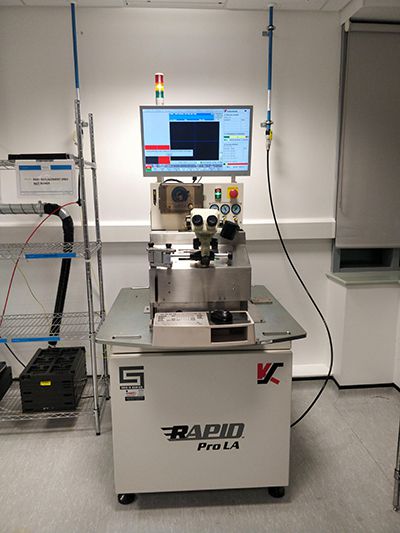
Kulicke & Soffa RAPID™ Pro automatic ball bonders installed in the Filtronic cleanroom
Inseto has supplied two Kulicke & Soffa RAPID™ Pro automatic ball bonders to designer and manufacturer of advanced RF communication solutions Filtronic. The two bonders are high speed and deliver high levels of repeatability, provided through real-time monitoring and diagnostics, and are helping Filtronic meet a six-fold increase in demand for its Orpheus E-band transceiver modules, used for 5G and other high data rate wireless applications, following an order from a major customer in the telecoms sector.
In addition to being used for the manufacture of Orpheus modules, the RAPID Pros are used on Filtronic’s next generation transceiver, Morpheus II, which is both smaller and 50% lighter than the previous version, enabling class leading 10Gbps mmWave backhaul.
The RAPID Pros enable fast switch over, giving Filtronic the flexibility to also manufacture two Transmit Receive Modules for phased array radars for the aerospace and defence markets on the same production line.
Richard Smith, Product Engineering Manager of Filtronic, comments: “All three of our main lines are hybrid assemblies, with multiple MMICs and other components that require high precision wire bonding. The RAPID Pro bonders help us solve two major manufacture challenges. The first being that, at these high frequencies, bond wire lengths and shapes affect the EM characteristics. Being able to precisely program the bond shape and maintain it within and between batches of a given product ensure consistent RF performance. Accuracy and repeatability are musts. The second challenge is maintaining throughput and increasing capacity. Since bringing in the K&S bonders we’ve seen a massive improvement in speed, largely down to the modern vision systems, and it takes about a minute to process a module with hundreds of bonds.
Bond quality has also improved because Filtronic has far better control over bond parameters than before. Smith concludes: “Automated bond adhesion quality is consistently higher, thus reducing the need for manual intervention. Combined with fast automated bonding, this results in an overall much higher production rate than before and we anticipate a return on investment in about three years”.
Ultrasonic Wire and ribbon Bonding of Lithium-Ion Battery Pack Interconnects
Read about optimising EV Battery & Power Module, wire and ribbon bonded battery interconnects: Electric vehicle battery pack manufacturers must get the most from well-established and proven manufacturing technologies if they are to rise to increasingly technical challenges and keep costs as low as possible.
That’s the essence of the cover story of this month’s issue of Electronic Product Design & Test, for which Inseto was one of the expert companies interviewed and quoted.
During recent years we’ve supplied a variety of battery interconnection wire bonders to commercial battery pack manufacturers and universities alike.
If you’re interested in hearing how we can help you with equipment and process know-how using wire bonding for battery interconnects, we’re exhibiting at Battery Cells & Systems Expo at the NEC, Birmingham, on 7th & 8th July. https://lnkd.in/dk7Tagf
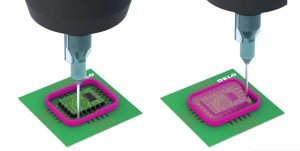
SVHC-free DELO MONOPOX GE6585 and GE6525 are both ideal for chip encapsulation techniques such as Dam & Fill, as shown respectively in the above images.
Andover, United Kingdom – Inseto is the first distributor serving the UK and Ireland to supply chip encapsulation adhesives for high reliability applications that are free of substances of very high concern (SVHC). Easy and trustworthy access to SVHC-free an adhesive made in the EU will become essential if, or more likely when, industry regulations come into force banning the manufacture of such products.
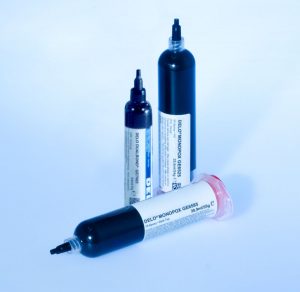
As DELO’s exclusive distributor in the UK & Ireland, Inseto can supply DELO MONOPOX GE6585 and GE6525, which are primarily used for Dam & Fill chip encapsulation, and DELO DUALBOND GE7065, which is mainly used for Glob Top chip encapsulation. All three cure to from rigid protective coatings and can be used for encapsulating not only semiconductor die but also sensors, which is a common practice in the automotive, aerospace and harsh environment industrial sectors, for example.
“Whilst not all chip encapsulation adhesives contain SVHCs, those that are needed to ensure high reliability do,” comments Eamonn Redmond, Sales Manager of Inseto. “And the European Chemical Association is constantly reviewing and working towards banning the use of SVHCs. Whilst it’s not certain when adhesives containing SVHCs will be banned they almost certainly will be. In addition, these new adhesives offer significant processing and performance upgrades over their SVHC-containing counterparts.”
DELO MONOPOX GE6585, DELO MONOPOX GE6525 and DELO DUALBOND GE7065, available in the UK and Ireland through Inseto, are believed to be the first SVHC-free adhesives on the market for applications where high reliability is a necessity.
DELO MONOPOX GE6585, DELO MONOPOX GE6525 and DELO DUALBOND GE7065 are believed to be the first types of SVHC free adhesive on the market for applications where high reliability is a necessity. They are offered as alternatives to existing DELO adhesives currently used for Dam & Fill and Glob Top chip encapsulation in applications where high reliability is important.
All three new adhesives have high shear strengths, low coefficients of thermal expansion (CTE), high glass transition temperatures (Tg), extended operating temperature ranges and an extremely high resistance to chemicals.
GE6585 and GE6525 are one-part heat-cured black epoxies. Compared to their SHVC-containing counterparts, the CTE has been nearly halved. However, the new adhesives retain the extremely high Tg of the existing adhesives (>170oC), making them ideal for high reliability applications; ensuring minimal risk of board warpage during assembly.
GE7065 is also a one-part heat-cured black epoxy with a low CTE and high Tg. It also has the added advantage of being light-fixable (optional) immediately after dispensing. In addition, the filler particle size is significantly reduced (to around 7μm), allowing the adhesive to flow more easily between very fine-pitch wire bonds.
All three new adhesives boast significantly shorter curing times than their SVHC-containing counterparts – 30 minutes at 100oC for GE6585 and GE6525, and 60 minutes at 130oC for GE7065 – and can be ordered now through Inseto.
Andover, United Kingdom – Inseto, a leading technical distributor of equipment and materials, has supplied Custom Interconnect Limited (CIL) with a Kulicke & Soffa Asterion large diameter wire / ribbon wedge bonder for use in the production of wide bandgap (WBG) semiconductor-based power modules and the assembly of battery packs.
Kulicke & Soffa Asterion Wedge Bonder Installed at Custom Interconnect’s (CIL) new BEV Facility
The Asterion is to play a crucial role in two major electric vehicle (EV) projects in which CIL is extensively involved. In the first, CIL is engaged with BMW on APC15@FutureBEV to maximise potential for future BEV systems. The project is one of 10 projects by the Advanced Propulsion Centre (APC) in its latest round of Government and industry funding for low-carbon emissions research.
In the second case, CIL is the project lead on GaNSiC – a project that stems from the UK Research and Innovation’s (UKRI) ‘Driving the Electric Revolution’ challenge and brings together CIL and Compound Semiconductor Applications Catapult (CSA Catapult). It is set to develop novel ways of applying Silver Sinter pastes to WBG semiconductors, such as Silicon Carbide (SiC) and Gallium Nitride (GaN) devices, to optimise their thermal coupling and solve complex power module assembly challenges.
John Boston, Managing Director of CIL, comments: “Because of the high currents EV power modules handle, both projects require the placement of heavy gauge wire or ribbon, of between 150 and 600microns diameter or width compared to fine-wire bonding, which tends to be about 25microns.”
Boston goes on to say that SiC-based power module designs are aiming to switch up to 800VDC and handle up to 600A. He adds: “You need heavy gauge, but heavy gauge wire bonding of wide bandgap materials is a relatively new technology. More than ever before, there’s a need for collaboration and trust within the industry. Also, with keeping costs low such an imperative in the automotive sector, the use of advanced manufacturing tools likely to produce the best results is essential, particularly when some vehicle manufacturers are demanding zero defects and stipulating that reworks are not allowed.
CIL is an electronic solutions provider. It has the largest independent ‘chip and wire’ facility in the UK and its micro-electronics packaging facility is regarded as being at the forefront of the EV power revolution.
Boston concludes: “In addition to APC15@FutureBEV and GaNSiC, we’re the manufacturing partner on many other EV projects, plus we have many customers in the aerospace sector – active under initiatives like the More Electric Aircraft and the All-Electric Aircraft. “
The K&S Asterion is located in CIL’s BEV facility, and joins an automatic die bonder and high pressure Silver Sinter press (both of which are for the packaging of WBG materials) and a scanning acoustic microscope, used to detect voids. The Asterion will also be used in the manufacture of EV batteries, specifically for bonding between cells and busbars/plates.
Established in 1986 and ISO9001:2015, ISO13485:2016 (Medical) and AS9100D (Aerospace) certification, CIL is also on the path to ISO/TS 16949:2009 (Automotive) certification. CIL has transitioned from a conventional EMS company into an Electronic Solutions Provider and currently manufactures some of the most complex mission critical electronic assemblies in the UK. A combination of 6 SMT lines, 3D AOI, Flying probe test and laser depanelling enables it to manufacture complex SMT PCBA. In addition, CIL also has one of the largest independent die and wirebond facilities in the UK. Three Automatic die bonders, and six Automatic wire bonders and various encapsulation systems are available. It is now entering a WBG power module manufacturing era to support both UK and EU based companies deploy SiC and GaN based assemblies.
Andover, United Kingdom – Inseto, a leading technical distributor of equipment and materials, has supplied the University of Warwick with a SemiProbe PS4L probe system for developing fabrication processes for next generation silicon-carbide (SiC) power semiconductor devices. The PS4L provides an accurate and repeatable means of mechanically interfacing fabricated prototype devices – as die or still on the wafer – with an analyser that can inject thousands of volts and measure hundreds of amps.
SemiProbe PS4L-SA – Silicon Carbide Wafer Probe Station at Warwick University
Dr Peter Gammon, Associate Professor (Reader) in SiC Power Electronics at the University of Warwick, comments: “We’re involved in a number of projects that are pushing the boundaries of silicon carbide power device research that will hopefully lead to the volume manufacture of device types that can currently only be fabricated in silicon. The PS4L is an invaluable tool in our endeavours as not only can it handle the high power from/to the analyser, but it is semi-automated, allowing us to collect a large amount of data from highly repeatable tests.”
Dr Gammon goes on say that most commercially available SiC power devices are unipolar structures, such as diodes and MOSFETs, which are well established and commercially available with high voltage ratings.
“We’re looking beyond these though, at bipolar devices that include IGBTs and thyristors because they will further enable highly efficient and ultra-high voltage applications, such as traction inverters and high voltage direct current in a low carbon society,” says Dr Gammon. “For example, silicon IGBTs are typically rated up to about 2,000V. As part of our work with the EPSRC Centre for Power Electronics, we are today producing silicon carbide IGBTs rated to 10,000V, with scope to go to 30,000V in the future.”
The PS4L is enabling Dr Gammon’s team to apply voltages of up to 10,000V and measure currents of up to 100A to confirm the performance and breakdown voltages of their devices. He says: “While we’re heading towards the production of IGBT and MOSFET switches, we’re able to do much of our work on simple structures such as diodes, in order to evaluate the repeatability of our fabrication processes.”
Following the supply and commissioning of the SemiProbe equipment, a software interface was written by Dr Gammon’s team to enable the PS4L and the high voltage parameter analyser to work together. “Both OEMs were incredibly supportive and gave us access to the source code of their respective products,” notes Dr Gammon.
The equipment is in use at the University of Warwick, one of only a few universities in the UK with SiC fabrication capabilities, and it has already enabled Dr Gammon’s team to capture data from larger test batches than would have otherwise been practical before. Also, there is more confidence in the data collected through automated processing, as it removes the discrepancies of manually obtained data, such as probe tip to pad alignment inconsistences and variations in contact force.
Dr Gammon, concludes: “Our new equipment represents a real game changer and the support Inseto provided has been exemplary throughout the entire process, from them understanding our requirements through to ensuring the PS4L was fit for purpose now and in the future.”
Inseto is exclusive distributor for SemiProbe in UK, Ireland and Northern Europe.
MAIN ENDS
About the PEATER Group at the University of Warwick
Established in 2005, the Power Electronics Applications and Technology in Energy Research (PEATER) group, located in Warwick’s School of Engineering is the UK’s leading research group into silicon carbide (SiC) power electronics. They have an international reputation for research into SiC power devices, with expertise that extends from atoms to systems, covering fundamental materials research, device simulation and optimisation, fabrication, characterisation, packaging and reliability testing. Their unique array of facilities include a dedicated SiC fabrication cleanroom, a SiC CVD system for epitaxial growth, a packaging cleanroom and multiple servers for TCAD modelling.
The PEATER group specialises in taking SiC into new and exciting application spaces. They are working on scaling up the voltage of SiC power devices, working on Schottky and PiN diodes, MOSFETs and IGBTS rated from 3.3 to 10 kV, for applications ranging from HVDC, traction and renewable energy storage and distribution. They are also working to produce the first radiation-hard SiC power devices that will be able to survive in the harsh environment of space, for telecommunication satellites. Meanwhile, the research group continues to work with major international companies on the roll out of existing SiC power solutions, particularly within the automotive sector.




 Back to top