Andover, United Kingdom – In April, Inseto donated £7,000 to seven local charities, all of which are close to the hearts of the company’s employees. Within days of the donations being made all seven charities sent letters that not only expressed huge thanks to Inseto’s employees but also conveyed how important the donations have been and what a positive impact they have had.
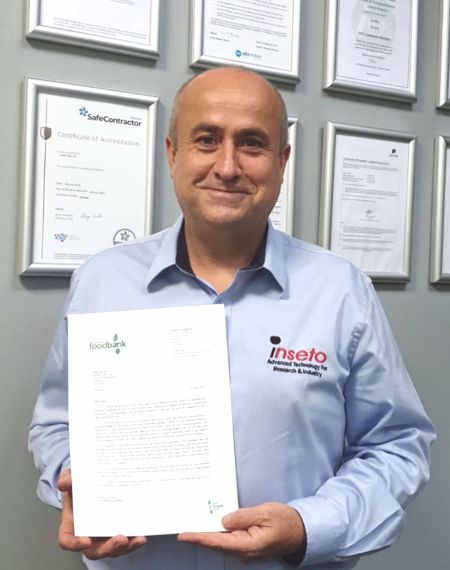
Matt Brown, Managing Director, pictured with one of the “Letters of Thanks”
Matt Brown, Managing Director of Inseto, comments: “It was great to receive these letters of thanks, which we’ve shared throughout the company, but it was also nice to be reminded of the work these charities are doing during challenging times. It’s all too easy, particularly when social distancing measures are in force, to look inwards, and not beyond the immediate boundaries of our personal and work lives.”
Below, we quote snippets from the letters of thanks Inseto received.
• Andover Foodbank “The disruption to daily life caused by the current virus has affected everyone but its greatest impact is on some of the most vulnerable people. Thanks to your donation, those in need in our local community have received food boxes, toiletries and cleaning supplies. We continue to work with our partner agencies who are helping people stay out of long-term debt or those who are at risk of domestic violence. Schools have been some of our biggest referral agencies during this time, supporting parents to feed and look after their children. We are all living with uncertainty and concern but worrying about how to feed your family increases that enormously. I wish I could show you the relief on people’s faces when they receive one of the food boxes, it is tangible.”
• Andover Mind “A big thank you for your donation of £1,000, this was such a lovely surprise in these unprecedented times. Your donation will help us to continue to support our community, when our services are needed more than ever.”
• The Countess of Brecknock Hospice “Thank you so much for your kind donation of £1,000.00. We are most grateful for this gift towards our work providing palliative care for our local community. Many of the services provided by the Hospice rely on support and donations to deliver exceptional care to patients and their families at a very difficult time.”
• Abel Foundation “You’re amazing, thank you, your kind donation will help so many children and families, we couldn’t do what we do without you.”
• Two Saints “We really appreciate this very generous donation from Inseto in these extraordinary times. Please pass on our thanks to everyone at Inseto for their kindness and please be assured that we will put your donation to excellent use to support the homeless and vulnerable people we work with.”
• Andover Crisis & Support “The kindness of you all is much appreciated and especially welcome; particularly during these very difficult times which I am sure you will appreciate has led to a substantial increase in demand for our support services. The centre continues to be staffed 24 hours a day by our dedicated team and although we have had to change our way of working in order to comply with current safety measures we are doing all we can to support those in need.”
• Naomi House & Jacksplace “Thank you for your generous gift of £1,000.00. Everyone at Naomi House & Jacksplace is truly grateful for the support of the team at Inseto UK. These are certainly difficult times for everyone, especially the medically vulnerable children, young adults and their families that use our services. Due to the current circumstances, we had to temporarily suspend respite care at Naomi House & Jacksplace, turning our focus to end-of-life care only. We’ve also seen a significant drop in fundraising incomes, with events and community revenues plummeting, and income from shops seeing a decline. So support like yours in needed now more than ever, and we cannot thank you enough for donating to us at this very difficult time.”
Matt Brown concludes, “It was very humbling to receive these letters of gratitude and to be reminded of how important it is to give back to the community. Together, the communications paint a common picture. Many, many people turn to charities in their hour of need, and those charities are heavily reliant on donations and fund-raising events. Take those away and those dedicated to helping are quickly placed in need of help themselves. Team Inseto was delighted to do its part, and we urge all companies to support their local communities.”
Andover, United Kingdom – Inseto, a leading technical distributor of equipment and materials, has been appointed by Germany-headquartered LS Laser Systems GmbH to distribute its products in the United Kingdom, Denmark, Finland, Iceland, Norway and Sweden.
LS Laser Systems Laser Trim Equipment
LS Laser Systems’ products are used in the semiconductor, microelectronics, automotive and other advanced engineering sectors. Products include laser systems for thick- and thin-film circuit trimming as well as laser markers. Lasers are available that vary in power and wavelength from Near Infrared (NIR) to far ultraviolet (FUV), and many are controlled by the company’s proprietary LS-MaTriCS software.
Reinhard Ferstl, CEO at LS Laser Systems, comments: “Inseto is representing complementary equipment manufacturers and supplying materials into the sectors we serve. The company is also strong and has an excellent reputation for customer service in the UK and Nordic regions.”
Matt Brown, Director of Inseto, adds: “We’re delighted to be representing LS Laser Systems through our Equipment Division, in which we already have manufacturing and test systems from 11 other equipment manufacturers. This breadth of suppliers, along with our technical specialists’ expertise, is making us a go-to company for advanced manufacturing equipment and materials in advanced engineering sectors.”
Andover, United Kingdom – Inseto, one of the UK’s leading technical distributors of equipment and materials into advanced engineering sectors, has donated £7,000 to seven local charities, all of which are close to the hearts of the company’s employees.
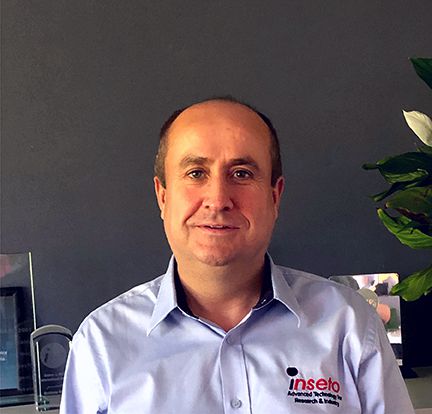
Andover-based Inseto has donated £7,000 to seven local charities. Matt Brown (pictured), Director of Inseto: “…we feel it is important to support our local charities, just as they have supported our employees and members of their families during their difficult times.”
A donation of £1,000 has been made to each of the following registered charities: The Countess of Brecknock Hospice, a specialist palliative care unit attached to Andover War Memorial Hospital, Andover MIND; which has been working in the area since 1984 to support and advise anyone affected by mental health distress; the Andover Crisis Support Centre, which provides accommodation for women and women with children in need of a supportive environment; Andover Food Bank, which provides support for local people in distress; Naomi House, which opened in 1997 to offer care and support to children who were not expected to live until adulthood; the Abel Foundation,which was created to aid the suffers of Mitochondrial Disease and help their families deal with this life limiting disease, for which there is currently no cure; and Two Saints, which provides safe housing and support services to reduce homelessness, and improve health and well-being.
Matt Brown, Managing Director of Inseto, comments: “Most charities are suffering during the Coronavirus COVID-19 pandemic and whilst the UK Government has announced an emergency support package for ‘front-line’ charities, we’re worried that funds may not reach several of our local ones here in Andover, that are more reliant on community based fund raising.”
Established in 1987, Inseto distributes equipment and materials, such as silicon wafers and specialist adhesives, used in the manufacture of integrated circuits (ICs, electronic chips) that are then used in mobile phones, wearable electronics, satellites and electric and hybrid vehicles, to name but a few applications.
Brown concludes: “Like most companies we’re having to watch our outgoings during these difficult times, but we feel it is important to support our local charities, just as they have supported our employees’ families and friends during their difficult times.”
Chris Valentine appointed to help Inseto’s valued customers further de-risk their semiconductor and MEMS fabrication projects.
Andover, United Kingdom – Inseto, a leading technical distributor of equipment and materials, has appointed Chris Valentine in the role of Technical Sales Engineer to work with customers to de-risk their semiconductor and MEMS manufacturing projects, by advising on material selection and the best tools to use for fabrication and test.
Chris Valentine
Valentine has a Masters in Science (MSci) in Physics from the University of Glasgow and a Masters in Research (MRes) from the University of Cambridge. He is also currently working on a thesis that could result in a PhD in Engineering being awarded by the University of Cambridge. Key subjects studied during his time in academia include advanced carbon nanotube electrodes for electromechanical sensing, MEMs manufacture and photolithography, electrical and nano materials, optical microscopy, solid state physics, semiconductor devices, and nuclear and particle physics.
Matt Brown, Director of Inseto, comments: “We are pleased to welcome Chris onboard. He is set to become a valuable extension to our team of technical specialists, and our customers will benefit greatly from the wealth of knowledge Chris gained during his academic studies and in various research projects.”
Valentine’s PhD research work includes the fabrication of electrochemical sensors to detect chemical analytes; the production of structured carbon nanotube electrodes to control porosity and morphology; and making improvements to the sensitivity and selectivity of fabricated sensors.
Inseto launches comprehensive online store for selecting and ordering silicon, silica, glass, coated and SOI wafers.
Andover, United Kingdom –
– Inseto, a leading technical distributor of equipment and materials, has added an online store to its website for semiconductor wafers. The store, which carries Inseto’s current inventory of wafers, including silicon, silica, glass, coated and silicon on insulator (SOI), features secure online payment and rapid delivery of stocked wafers. Also, Inseto’s online inventory is soon to include sapphire, silicon on sapphire (SoS), lithium niobate, germanium and other materials.
Inseto launches comprehensive online store for selecting and ordering silicon, silica, glass, coated and SOI wafers.
A powerful filtering tool enables users to narrow
down their searches by specifying properties common to all wafers, such as
diameter and thickness. Then, depending on wafer material, the properties
become more specific. For example, silicon wafer properties include ingot
growth method, crystallographic orientation, dopant, grade and upper and lower
surface resistivity.
The site also carries a Semiconductor Wafers Selection Guide. This is accessible from within the online store and from within Inseto’s Knowledge Base, a repository of freely available, viewable and downloadable articles and guides. Brown concludes. “At Inseto, we’re all about customer support. It’s in our DNA. Also, whilst the online store has greatly speeded the wafer selection and ordering process, our experts remain on hand to offer advice and guidance if anyone does have questions.”
Matt Brown, Director of Inseto, comments: “We
have ploughed the combined knowledge of our wafer and supply chain experts into
our online store. In our experience, most customers know the exact
specifications of the wafers they need, certainly in the case of repeat orders,
or they wish to rapidly explore a range of properties and available options.”
DELO MONOPOX TC2270, a new specialist adhesive ideal for chip bonding – and other applications where electrically insulated heat transfer is required – is now available from Inseto.
Andover, United Kingdom – Inseto, a leading technical distributor of equipment and materials, is now supplying DELO’s new MONOPOX TC2270, a thermally conductive, electrically insulating adhesive, which is ideal for bonding silicon die and other applications where rapid heat transfer is essential.
For example, heat build-up is a common reason for
integrated circuit failure and the efficient dissipation of heat in power
semiconductors, as used increasingly in automotive applications, is a
considerable challenge. With a specific thermal conductivity of 1.7 W/mK, DELO
MONOPOX TC2270 ensures efficient heat transfer between die and packaging. It is
also cheaper than silver epoxy, which has the often-unwanted property of being
electrically as well as thermally conductive.
Supplied in 10ml syringes, DELO MONOPOX TC2270
boasts many other benefits too. For instance, the minimum curing temperature is
60oC in about 90 minutes, which means it can be used with temperature
sensitive materials with little risk of introducing stress or causing warpage.
In addition, it is a one-part adhesive, so no mixing is required and storage is
at -18oC, a temperature accommodated by standard commercially
available freezers; whereas most die-attach adhesives need to be stored in
industrial freezers at much lower temperatures, such as -40oC.
Once cured, DELO MONOPOX TC2270 delivers a die
shear strength of 60N/mm2 and has an end-application use range of
-40 to +150oC, which is more than adequate for most silicon-based
semiconductors.
Eamonn Redmond, Sales Manager of Inseto,
comments: “The adhesive’s chemistry includes aluminium nitride, which ensures
heat is quickly transferred away from the die, thus increasing the potential
lifetime of the chip. Also, the fact that it is readily available in 10ml
syringes means that users reduce the risk of having to dispose of out-of-date
adhesive.”
In addition to its good shear strength, DELO
MONOPOX TC2270 boasts a relatively high flexibility (11% compared to the less
than 2% exhibited by most epoxies), making it ideal for bonding larger die. It
also has a very low water absorption figure of just 0.1% and, once cured, volume resistivity is greater
than 1xE14 Ohm cm and its surface resistance is greater than 1xE13 Ohms.
DELO MONOPOX TC2270 has an anticipated shelf life of six months. The datasheet for this adhesive, along with others from the DELO MONOPOX one-part, heat-cured epoxies range, can be viewedonline at Inseto’s website, which also contains the datasheets of other adhesive types (chemistries, curing methods etc.) and an extensive Knowledge Base library of articles and guidance notes.
Redmond concludes: “The TC2270 is an extremely useful adhesive in the world of microelectronics and in any application where heat must be transferred without establishing an electrical connection.” Inseto is DELO Industrial Adhesives’ exclusive distributor in the UK and Ireland. Other products available through Inseto include an extensive range of UV cured or light activated epoxies, light cured acrylates, light / heat cured epoxies, dual curing materials, light / anaerobic curing adhesives, 2-part polyurethanes, 1- & 2-part epoxies, cyanoacrylates and single part silicones.
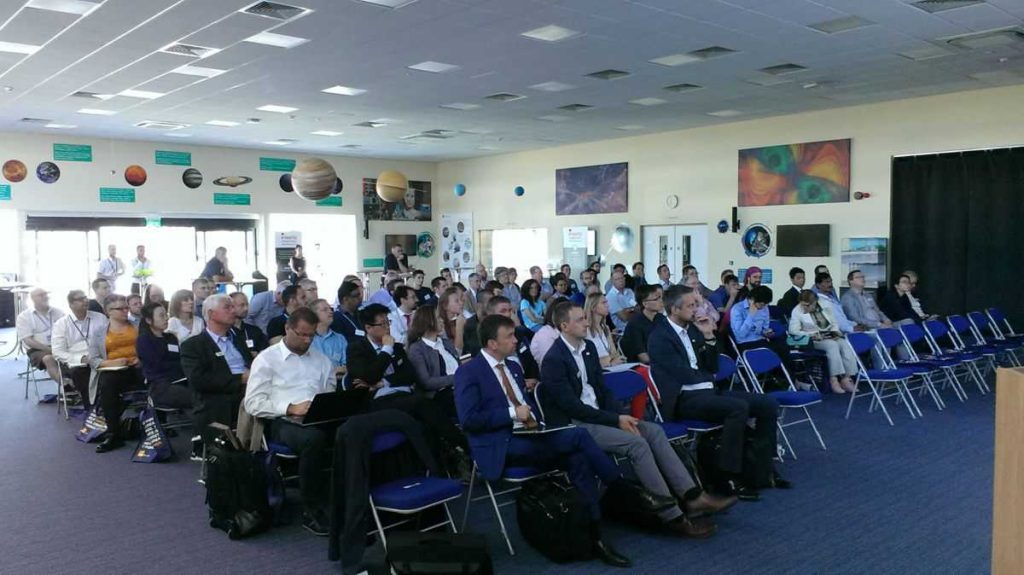
With some 90 visitors attending from industry and academia, the inaugural SUSS MicroTec sponsored “UK Lithography Conference”, held on 4th July 2019, had an over-arching theme of ‘productivity and efficiency’ and was a resounding success.
Hosted by
Rutherford Appleton Laboratory, the conference was split into three sessions, the
first of which was entitled ‘Surface Preparation’, which began with sound advice
on substrate selection. For this, Ian Burnett of Inseto, had a clear message: quality
lithography depends heavily on quality wafers. Though SEMI standards exist for
wafer thickness tolerances, flatness, surface roughness etc. for repeat runs,
and to ensure consistent results, there is no substitute for using wafers from
the same ingot, supplied in the order in which they were sliced.
Next in the
session, Joost Driven and Dominique Bouwes of Micronit Mictrotechnologies discussed
material structures, focussing on the benefits of polymer and the associated
challenges of processing it; challenges that include ensuring a crack-free
surface, structural accuracy (i.e. dimensions of features), cleanliness (of
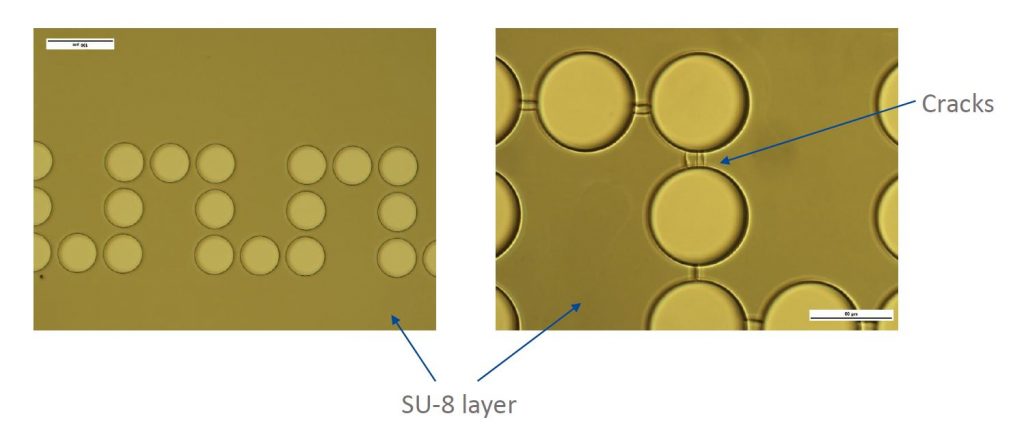
channels, trenches and holes) and adhesion. Figure 1 shows how cracks can form.
Figure 1 – Cracks can form due to a release in tensile stress in the resist layer.
Driven and
Bouwes than gave examples of polymer-based devices; a bio chip for life
sciences and a MEMS-based hair flow sensor.
The first
session concluded with Tim Bruchmueller, Product Manager 200mm coaters, of SUSS
MicroTec discussing recent developments with coating technologies in the SUSS
camp. Using the just-launched SUSS ACS 200 GEN3 LabCluster coater and developer
as an example, and without being overly sales-pitchy, Bruchmueller explained
how, for example, developments around the resist bottle (which is inverted)
reduce the risk of getting air into the dispensers.
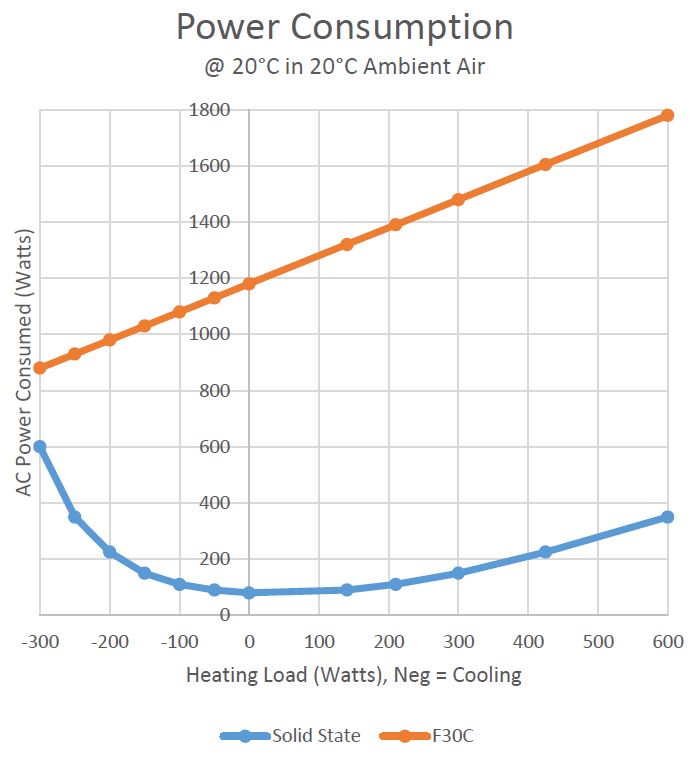
Figure 2 – Greater energy efficiency plus other benefits using the Peltier Effect
Also, by taking advantage of the Peltier-Effect (as exhibited by some semiconductors) means positive or negative temperature differentials can be created for heating or cooling purposes. Where cooling is concerned this means no need for compressors (and their associated vibrations) and refrigerant liquids. Perhaps the biggest benefit is a lower electricity bill, as reflected in figure 2.
Second
Session
The theme
for this session was Exposure, and Dr. Marc Hennemeyer, Director of SUSS
MicroTec’s Application Centre for Lithography, started proceedings by giving a
presentation on MEMS processing challenges. These include needing consistent
processing for different types of substrate material (Si, SiO2,
LiTa, ceramics etc.) and the popularity of material stacks (for example,
Si-based CMOS device wafers on top of mechanical device wafers).
When forming
relatively large features on substrates with high topographies, large exposure
gaps are caused. However, this can lead to reduced side wall angles. Also,
steppers cannot achieve sufficient process results due to their limited depth
of focus (DOF). In this respect, Dr. Hennemeyer proposed Fresnel Zone Plate
(FZP) processing as a solution, describing FZP as, in essence, a diffractive
lens. The process, which is generally for feature sizes greater than 2um, is somewhat
removed from traditional proximity lithography.
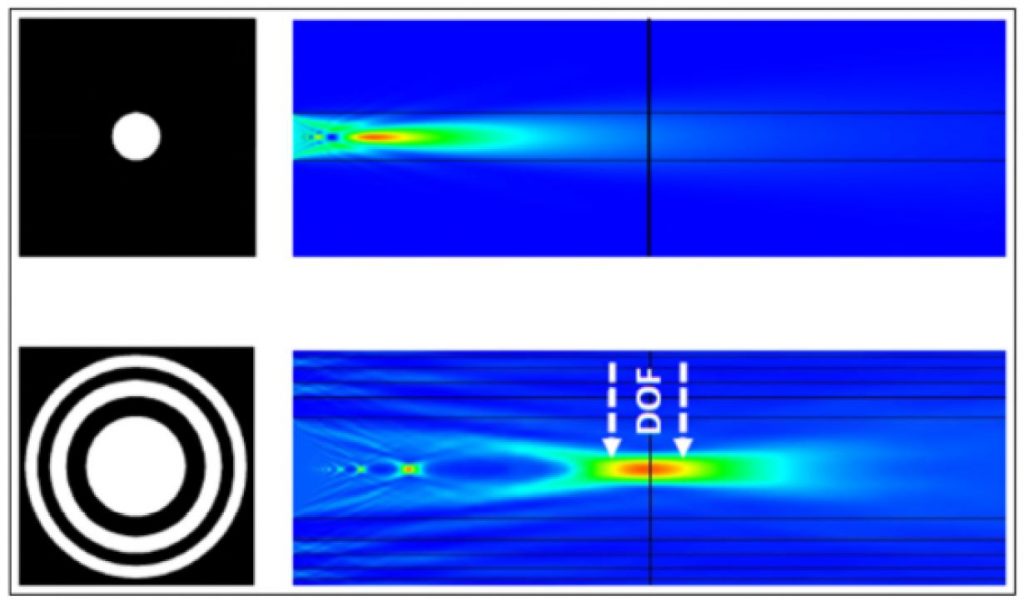
A diagram Dr. Hennemeyer talked around is reproduced here as figure 3. It compares the DOF of a traditional mask used to make a hole versus an FZP.
Figure 3 – Above, a comparison of traditional mask and the Fresnel Zone Plate used to create identical features (etched holes).
With
reference to the above diagram, in the top left we have a round hole in a mask.
To the right, we have a prediction of the light intensity when projected
through the mask. The DOF is relatively close to the mask. Below that, on the
left, we have an FZP mask. The pattern is larger and more complex, requiring
polarity changes in the rings, but the DOF is greater (and further away from
the mask).
Dr. Hennemeyer held the floor to give a follow-on presentation about improving proximity imaging quality using diffractive elements. A key point made concerned the use of optical proximity correction (OPC) and the inclusion of features on the source mask that are not meant to be printed. Rather they are present to ‘influence’ the shape that will be printed. For example, the rounding effect means that a square in the mask might produce something closer to a circle. However, the presence of features (smaller squares) to ‘re-enforce’ the corners can result in the printing of a much better square; subject to the size of the smaller squares and their distance from the main square on the mask. See figure 4.
Figure 4 – Optical proximity correction can be used to combat rounding effects and print shapes much closer to requirements.
However, OPC
on mask aligners is more challenging than on steppers. Simulation provides
considerable benefits though according to Dr. Hennemeyer, who went on to
recount the developments of a joint SUSS/GenISys project. Findings to date
reveal that light source stability and reliable gap settings are key to
implementing OPC, which helps in the creation of ‘sharper’ features and steep
side walls.
SUSS MicroTec kept the floor for the next presentation, as Christof Kronseder gave an overview of UV LED light sources and recounted a number of developments that have taken place during recent years. The advantages of LED over traditional mercury lamps include lower running costs (during use and by virtue of not requiring a warm-up) and reduced cooling requirements. Kronseder recounted that SUSS began its LED journey with an alternative for 350W mercury lamps and is currently working on a 1kW system.
Third Session
This session was themed ‘Imprint / Applications’ and began with a presentation from Dr. Simon Drieschner, an Applications Engineer with SUSS MicroTec, on solutions for micro and nano imprinting, using substrate conformal imprint lithography (SCIL) and SUSS’s proprietary SUSS MicroTec imprint lithography equipment (SMILE) respectively (see figure 5).
Figure 5 – Above, the SUSS MicroTec imprint lithography equipment (SMILE) process steps.
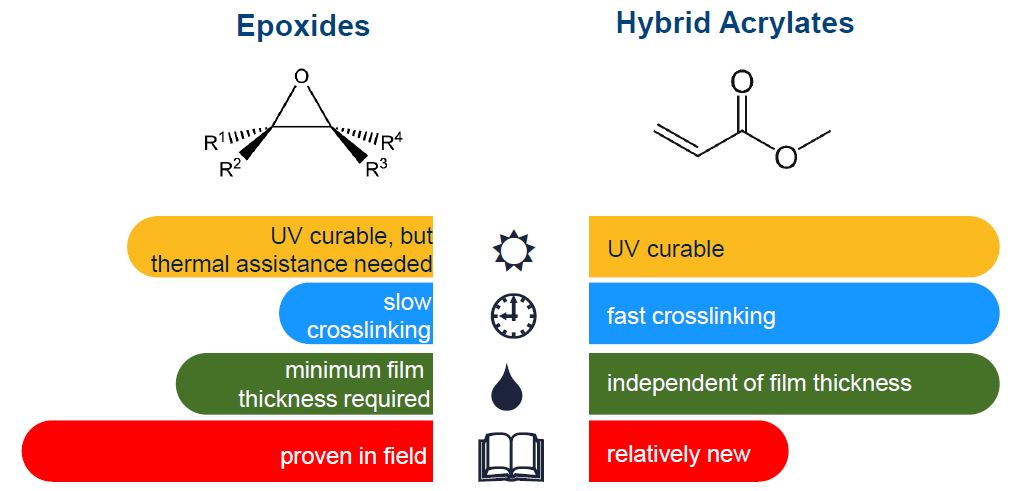
The presentation included a comparison of stamp materials from a total-cost-of-ownership perspective and factored in curing times, which are often overlooked but essential for volume manufacturing scenarios as they can vary from circa 15 minutes to more than three days. Two main materials were compared, epoxides (which are proven in the field) and hybrid acrylates (which are a relatively new development but watch this space as the benefits are considerable). See figure 6.
Figure 6 – New hybrid acrylate stamps require only a short (UV) curing time and have a long life.
The session concluded of the UK Lithography Conference was a report from academia, in the form of a presentation from Swansea University, given by Dominic Chung Man Fung and which provided an example of the SCIL process as part of an Innovate UK funded project.
The project
was to develop a low cost, volume fabrication process for a wafer scale
distributed feedback (DFB) laser. Challenges included feature size and shape
(plus achieving steep sidewall angles), stamp [soft master] curing time, the
hard master having an anti-stick layer (ASL) and, of course, attaining high
yield.
Incredible
results have been achieved so far on 3” wafers. For instance, an ASL for the
hard master has been created using FDTS (a.k.a. Perfluorodecyltrichlorosilane –
an anti-sticking process used in other technology fields) and soft stamps are
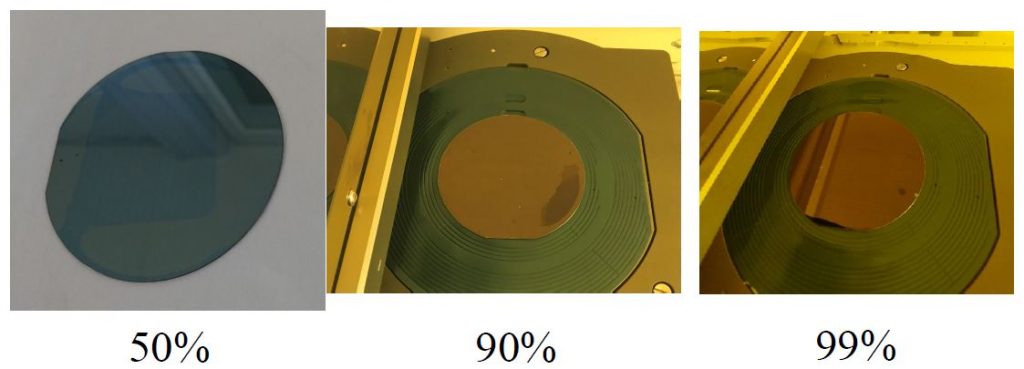
exhibiting high reproducibility. The most impressive achievement however is how
rapidly high yield has been attained – see figure 7.
Figure 7 – Swansea University’s wafer on wafer yield improvements awed all present at the UK Lithography Conference.
Future goals include attaining 100% yield (far from unachievable considering the results to date), scaling to 4”, 6” and 8” wafers and performing studies into the lifetime of the soft master.
The inaugural UK Lithography conference provided attendees with a wealth of advice on how to achieve productivity and efficiency through tool developments and new methodologies.
The
inaugural UK Lithography Conference concluded with a note of thanks from Matt
Brown of Inseto, the organiser of the event. Thanks went to Rutherford Appleton
Laboratory for hosting the conference, to SUSS MicroTec for their sponsorship
and to the speakers (most of whom had travelled in from outside the UK).
To repeat a
few words from the intro of this report, the event was a resounding
success. The lithography community is facing (and as the conference proved, is
solving) a whole host of technical challenges amidst a backdrop of commercial
pressures.
Productivity and efficiency are being realised through developments in tools and methodologies and, through networking events like the conference, ideas are being shared and further developed – which is all great news for this exciting industry.
Inseto supplies STFC with a semi-automated mask aligner to advance its in-house manufacturing capabilities and enhance the services offered to SMEs and start-ups.
Andover, United Kingdom – Inseto, a leading technical distributor of equipment and materials, has supplied the Science and Technology Facilities Council (STFC) with a SUSS MicroTec MA8Gen4Pro mask aligner for the lithography of semiconductor wafers.
STFC’s investment in the mask aligner was made for two reasons. Firstly, it is being used by STFC’s Interconnect Group, which designs and manufactures advanced packaging solutions for semiconductor die needed for scientific instruments. The MA8Gen4Pro will soon be used for the placement of millions of 20μ diameter bumps on a 50μ pitch onto a wafer containing more than 100 die; with each die set to measure just 196mm2 and to 65,000 bumps.
Secondly, the MA8Gen4Pro has become the latest piece of equipment STFC’s Innovations Technology Access
Centre (I-TAC) makes available to start-ups under an innovative service to incubate SMEs. I-TAC has nearly
100 companies and groups leasing their facilities for projects ranging from sensors for gas turbines, lab on
chip and devices for head-up displays.
Matt Brown, Director of Inseto, concludes: “We’re delighted that the SUSS MicroTek equipment is playing a vital role in the manufacture of the chips for the STFC’s particle physics experiments and that I-TAC’s customers will have access to the latest generation aligner for their development and manufacturing purposes.”
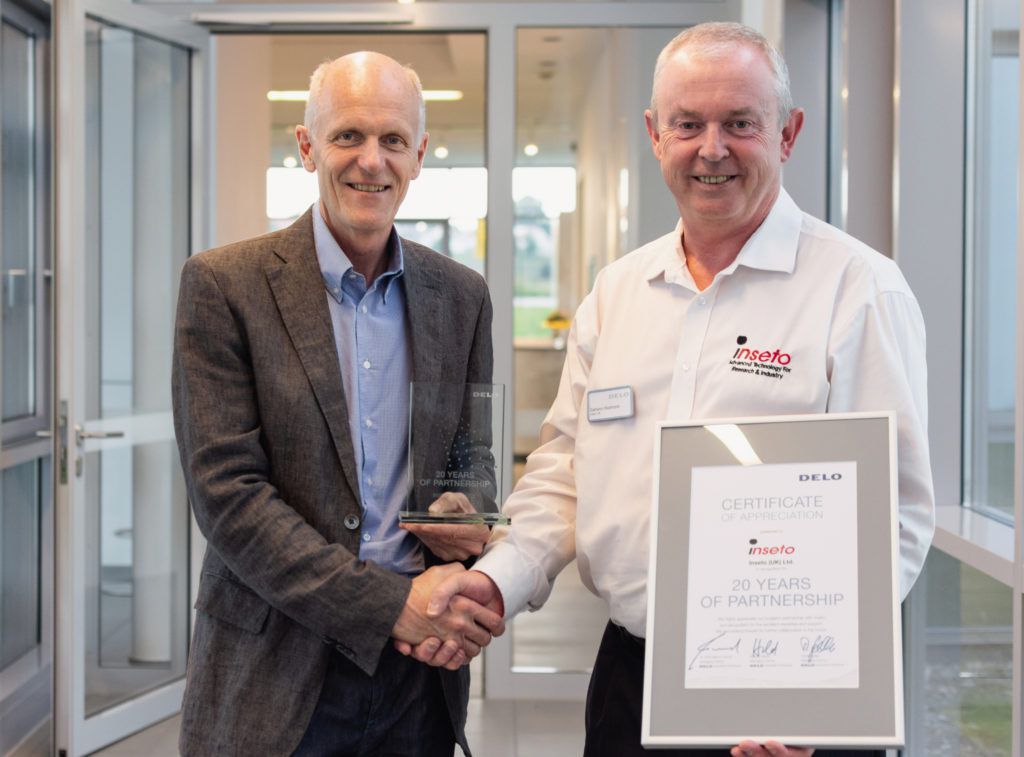
Inseto and DELO celebrate 20 years of partnership.
Andover, United Kingdom – Inseto, a leading technical distributor of equipment and materials, and DELO, a
leading manufacturer of industrial adhesives, are celebrating 20 years of partnership during which meeting
customers’ needs has, and remains, an unwavering top-priority.
Inseto is DELO’s exclusive distributor in the UK and Ireland and has extensive experience of supporting
customers in high-tech engineering sectors – including electronics and microelectronics – and harsh
environment industries including aerospace, automotive and oil & gas.
Robert Saller, Managing Director of DELO, comments: “Since their appointment in 1998, Inseto has always
impressed us with their knowledge of adhesives and the way in which they work tirelessly with customers to
find fit-for-purpose solutions.”
In addition to advising customers on which standard products will best meet their requirements, Inseto has
worked with DELO’s R&D chemists during the development of new adhesives needed for custom
applications. One such example of this collaborative process resulted in the development and launch of a
light-activated adhesive and process; in that the components being bonded were non-transparent, so the
light-curing had to be ‘triggered’ at a critical build stage.
Other success stories, and there are many, include the provision of adhesives for: the bonding of positional
sensors in power assisted steering modules using a pre-activated cationic epoxy; the mechanical protection
of large components in high-vibration environments using a light-cured epoxy; the encapsulation of
electronic components in single-use medical instruments using a two-part Polyurethane; and the protection
of silicon die and wire bonds in multiple microelectronic applications.
Eamonn Redmond, Sales Manager of Inseto, comments: “It’s a privilege to be working with DELO, as the
company has a very healthy attitude to R&D, and as the industry presents new bonding challenges, the
company is quick to respond with not just new chemistries for adhesives but also the processes required to
meet customers’ needs.”
Redmond’s observation is borne out by the fact that more than 40% of DELO’s revenue during its most recent
financial year, came from adhesives developed in the last three years; proof-positive that the company is
responding to industry’s emerging needs. Recent ground-breaking technologies include: dual-curing
adhesives for use in multiple applications; low-temperature curing adhesives for temperature-sensitive
substrates; and high temperature-resistant epoxies for the most demanding of applications.
Saller concludes: “Inseto has played a crucial role in strengthening our footprint in the UK and Ireland during
the last 20 years and we’re very much looking forward to continuing the partnership.”
For information on DELO’s products, available through Inseto’s Adhesives Division, please visit
inseto.com/adhesives.php.
Inseto appointed to represent SUSS MicroTec in Finland, Norway and Sweden.
Andover, United Kingdom – Inseto, a leading technical distributor of equipment and materials to the
microelectronic research and manufacturing sectors, has been appointed to represent semiconductor
manufacturing equipment OEM SUSS MicroTec in Finland, Norway and Sweden.
Under the arrangement, Inseto’s Equipment Division will be responsible for the regional sales of mask and
wafer aligners, spin coaters, wafer bonders and other equipment from SUSS MicroTec’s product range.
Virginie Quet, SUSS MicroTec’s Director of Sales and Marketing in Europe, the Middle East and Africa,
comments: “Inseto has been representing our product lines in the UK and Ireland for a little over a year and
we are extremely impressed with their knowledge of the semiconductor industry.”
Inseto’s experts have received formal training from SUSS MicroTec on the use of its equipment. This
knowledge, when combined with Inseto’s complementary equipment portfolio and ability to supply wafers
and other materials, means the company can provide a comprehensive sales service; one that best supports
customers’ overall programme goals.
Jim Rhodes, Technical Sales – Nordic, of Inseto, comments. “We know the territories extremely well as we’ve
been representing other OEMs and their product lines in Finland, Norway and Sweden for almost 10 years
now, and we have well-established relationships with customers already using, or who could benefit from
using, SUSS MicroTec’s semiconductor manufacturing equipment.”
Quet concludes: “At SUSS, we choose our partners very carefully and, in Inseto, we feel there’s potential for
an enduring partnership that will benefit our highly valued customers in Finland, Norway and Sweden.”








 Back to top